The App Is Watching You Back: How Sportsbook Design Rewires Your Decision-Making
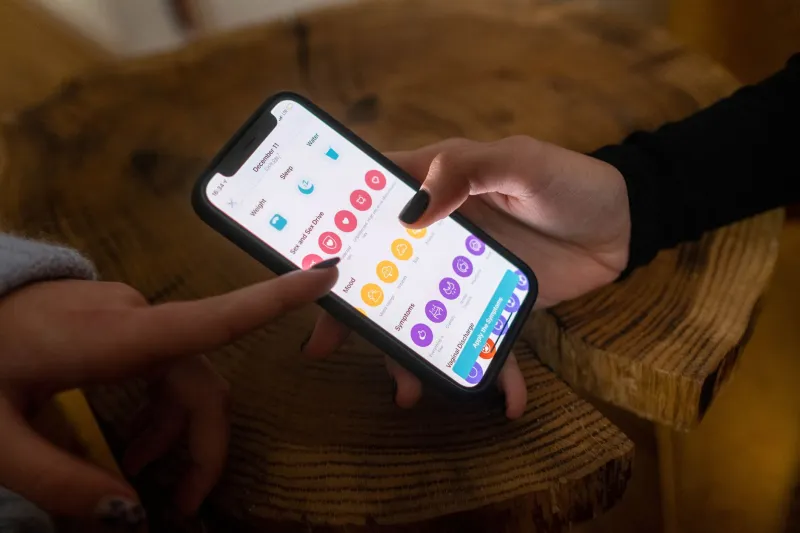
Open any major sportsbook app right now. Look at it for ten seconds. What do you notice?
Bright colors. Flashing odds. A notification badge. Maybe a "Last chance" banner on a same-game parlay. Your favorite team's logo sitting right at the top of the home screen like it was always meant to be there.
None of that is an accident. Every pixel of a modern sportsbook interface has been A/B tested, iterated, and optimized — not to help you win, but to help you bet. There's a meaningful difference between those two things, and understanding it might be the most important edge you develop as a bettor.
The Science Behind the Screen
Behavioral psychology has been influencing casino design since the days of windowless floors and free drinks. But digital interfaces are exponentially more powerful because they can be personalized, adjusted in real time, and delivered directly to your pocket at any moment of any day.
Sportsbook apps are built on a foundation of documented cognitive biases — mental shortcuts the human brain uses to process information quickly. In everyday life, these shortcuts are useful. Inside a betting interface, they become exploitable levers.
Recency Bias and the "Hot" Market Trap
Recency bias is the brain's tendency to overweight recent events when making decisions. If a team won three straight games, your gut says they're "hot" and will probably win again. Sportsbook interfaces are specifically designed to feed this instinct.
Notice how trending bets, popular same-game parlays, and "most wagered" markets are always surfaced prominently? That's not curation — it's amplification. The book knows that showing you what other people are betting makes those outcomes feel more probable than they actually are. Social proof is a bias trigger, and the app pulls it constantly.
The counter-move: never start your betting session on the home screen. Go directly to the sport and market you researched before opening the app. The home screen is a funnel designed to redirect your attention before you've placed a single bet.
Loss Aversion and the Cash-Out Button
Loss aversion is one of the most well-documented phenomena in behavioral economics. Humans feel the pain of a loss roughly twice as intensely as the pleasure of an equivalent gain. Sportsbook apps have built an entire feature around this: the cash-out button.
When your bet is live and your team is up, the cash-out offer appears. It's always lower than your potential payout — sometimes significantly so. But the framing works because it converts an uncertain future outcome into a certain present one. Your brain, wired to avoid loss, grabs the guaranteed amount even when the expected value of letting it ride is higher.
The cash-out function isn't inherently evil. There are legitimate strategic uses for it. But the way it's presented — with urgency, with a countdown, with the number displayed prominently in green — is specifically calibrated to trigger your loss aversion at the exact moment you're most emotionally invested in the outcome.
Color, Sound, and the Dopamine Loop
Red and green are not neutral color choices. In the context of a betting app, green means money, winning, go. Red means danger, loss, urgency. These associations are deeply wired and the apps exploit them deliberately.
When your bet wins, the screen lights up. There might be a sound effect. A number climbs. This is the same dopamine-trigger loop that makes slot machines compelling — a variable reward delivered through a sensory experience. The hit feels good. Your brain files it as "the thing I should do again."
Lose a bet and the interface moves on quickly. There's no lingering animation, no recap of what went wrong. The loss is minimized; the win is celebrated. That asymmetry in presentation shapes your memory of your own betting history in ways that consistently flatter your self-assessment.
One-Click Betting: Removing the Pause That Protects You
One of the most consequential UX decisions in modern sportsbook apps is the streamlining of bet placement. The fewer steps between impulse and action, the more bets get placed. That's the entire logic behind one-click confirmation, pre-filled bet amounts, and persistent bet slips.
That friction you bypassed? It was doing work. Every extra tap is a moment of potential reconsideration. Every confirmation screen is a tiny speed bump that gives your prefrontal cortex — the part of your brain responsible for rational decision-making — a chance to check in.
When that friction disappears, your limbic system runs the show. And your limbic system does not have a bankroll management strategy.
Practical fix: manually set your bet amount every single time, even if the app pre-fills it. That one extra action reintroduces a moment of intentionality that the interface is trying to remove.
Push Notifications as Behavioral Nudges
Your sportsbook knows when you last logged in, what you last bet on, and roughly when you're most likely to engage. Push notifications aren't random — they're timed to catch you in windows of availability or vulnerability.
Getting a "Your team plays tonight — don't miss out" notification at 4:45 PM on a Friday is not a coincidence. That's a trigger delivered at the moment you're transitioning out of work mode and into leisure mode, when your decision-making is shifting from disciplined to relaxed.
The counter-move is simple but requires commitment: turn off sportsbook push notifications entirely. Check the app on your schedule, with your research already done. The moment you let the app decide when you engage, you've handed over a meaningful degree of control.
Playing the App on Your Terms
None of this means you can't use these platforms profitably. It means you need to use them with awareness. The bettors who win consistently aren't the ones who resist every psychological trigger in real time — that's exhausting and unrealistic. They're the ones who build systems and habits that keep those triggers from reaching the decision-making layer in the first place.
Do your research offline or in a notes app before you open the sportsbook. Know your bet, your unit size, and your line target before you log in. Navigate directly to the market. Place the bet. Log out.
The app is a tool. A very sophisticated, psychologically optimized tool that wants to be used more than you planned. The sharpest bettors treat it exactly like that — a means to an end, not an environment to browse.