Five Casino Habits That Pay the House (And How to Stop)
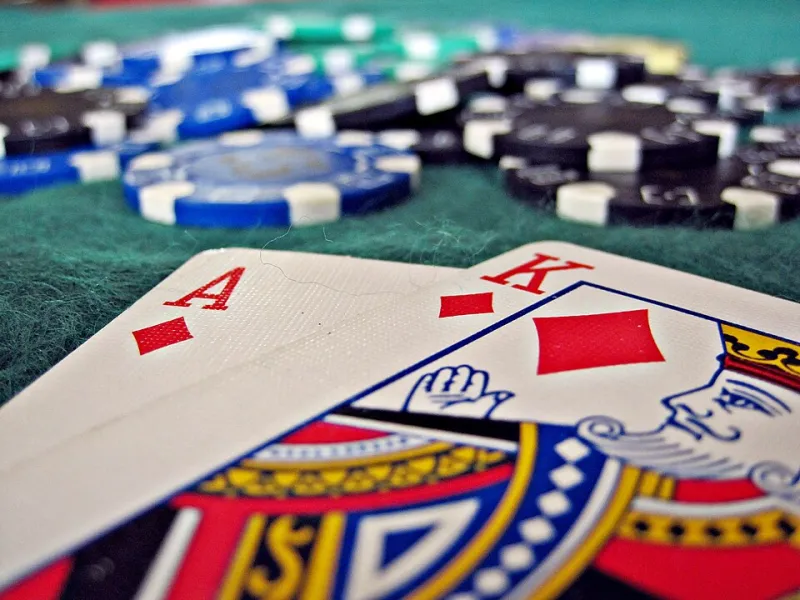
Photo: Images Money, CC BY 2.0, via Wikimedia Commons
The house does not cheat — you do
Nobody walks into a casino planning to donate money. Yet plenty of players do exactly that, not because the games are rigged, but because small habits add up. An insurance bet here, a side wager there, a bonus playthrough skimmed on the way to the blackjack table — none of it feels dramatic in the moment. Over a session, those choices quietly hand the edge back to the house.
Live dealer games and mobile casino apps make it even easier to fall into autopilot. The pace feels social, the buttons are close, and the bets are small enough to feel harmless. Here are five habits that pay the house — and what to do instead.
1. Buying insurance in blackjack
Insurance feels protective. The dealer shows an ace, offers insurance, and you think you are guarding your hand. In reality, insurance is a separate side bet that pays 2:1 if the dealer has a ten-value card underneath. That is not the same as protecting your original wager.
With a dealer ace showing and no other information, 16 of the remaining 51 cards are worth ten. That is roughly 31.4% of the deck. A fair payout for a 31.4% chance would be about 2.19:1. The casino pays 2:1. That gap is the house edge, and it is not small. For most casual players, insurance is a bad bet even when it feels clever.
The smarter alternative: skip insurance unless you are a skilled card counter tracking the deck. If you want to protect a big hand, the better move is usually to accept variance and stick to basic strategy.
2. Treating side bets like the main event
Perfect pairs, 21+3, bonus poker side bets, and similar wagers are designed to be exciting. They also tend to carry much higher house edges than the base game. A blackjack table with a 0.5% house edge can become a 2%, 5%, or worse experience when you add a side bet every hand.
The math is simple: every extra wager gets its own house edge. If you bet $10 on the main hand and $5 on a side bet, you are not just risking $15. You are splitting your action between a good bet and a bad bet. The bad bet drags the whole session down.
The smarter alternative: keep side bets as rare entertainment, not a routine. Budget a small amount for them separately, or skip them and put that money toward the main game where your decisions actually matter.
3. Chasing the hot streak
A hot streak feels like information. It is not. Each round of blackjack, roulette, or craps is largely independent of the last one. Raising your bet because you won three hands in a row does not make the next hand more likely to win. It just increases the amount exposed to the same house edge.
This is where casual players get hurt. A $10 flat bettor might lose $5 per hour in expected value at a low-edge game. The same player doubling bets during a hot streak can lose much more without realizing it. The casino does not need a cold table. It just needs you to bet bigger.
The smarter alternative: set a unit size and stick to it. If you want to press a win, do it with a pre-planned cap, not a feeling. A stop-win and stop-loss rule protects the bankroll from your own excitement.
4. Skimming the bonus rules
Casino bonuses look like free money until you read the wagering requirements. Playthrough, game contributions, maximum bet rules, expiration dates, and cashout caps can change the value completely. A 100% match bonus with a 40x playthrough is not the same as a 20x bonus. Table games may contribute only a small percentage toward playthrough, or none at all.
The hidden cost is the extra play. If you have to wager $2,000 to clear a $50 bonus, you are exposing $2,000 to the house edge. At a 2% edge, that is $40 of expected loss before you ever cash out. Suddenly the bonus is not so generous.
The smarter alternative: read the terms before opting in. Calculate the effective playthrough and check whether your favorite games even count. A smaller bonus with fair terms beats a big bonus that forces you into bad bets.
5. Playing for comps instead of value
Comps and tier credits feel like a reward for loyalty. They are also a marketing tool. Casinos generally award comps based on theoretical loss — the amount they expect to win from your play over time. Chasing a tier level often means playing longer or betting bigger than you planned, which increases that theoretical loss.
If a comp is worth 0.2% of your action and the house edge is 2%, you are still losing more than you get back. The free room or dinner is not free if you played an extra two hours to earn it.
The smarter alternative: treat comps as a bonus, not a goal. Play the games you enjoy at the stakes you already planned. If a comp arrives, great. If you have to chase it, it is not a reward — it is a discount on a bad decision.
The pattern behind all five
Every habit on this list works the same way: it adds extra action, extra risk, or extra time without improving your actual advantage. The house does not need to cheat. It just needs you to keep making small, comfortable choices that point in its favor.
Bet smart, read the rules, and keep the entertainment budget separate from the decision budget. That is how you stop paying the house twice.